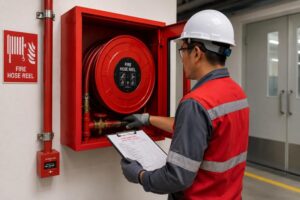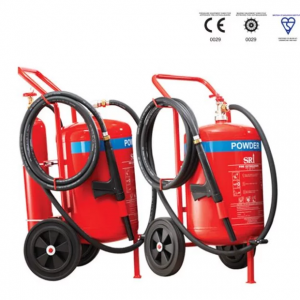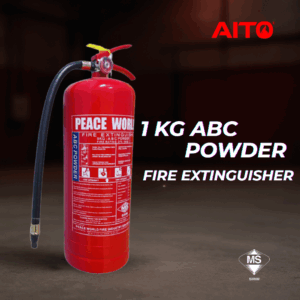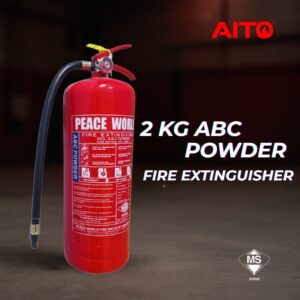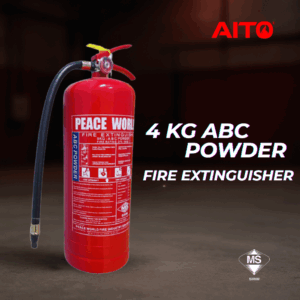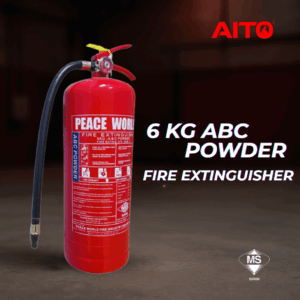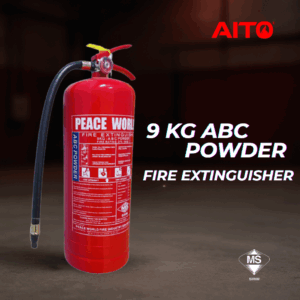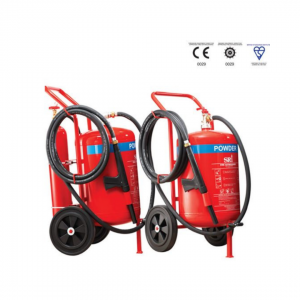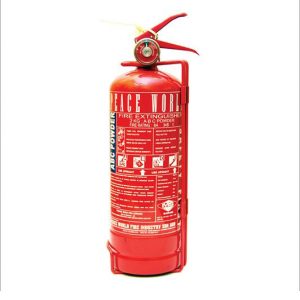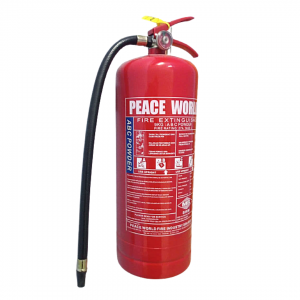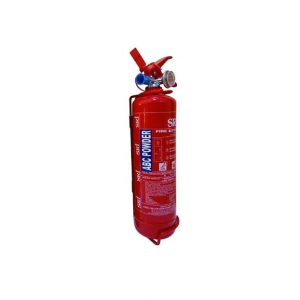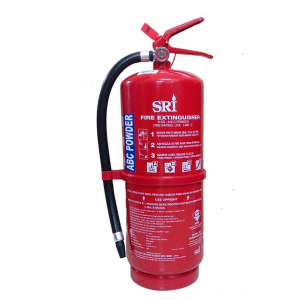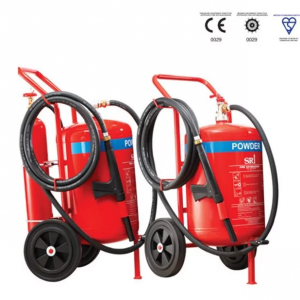
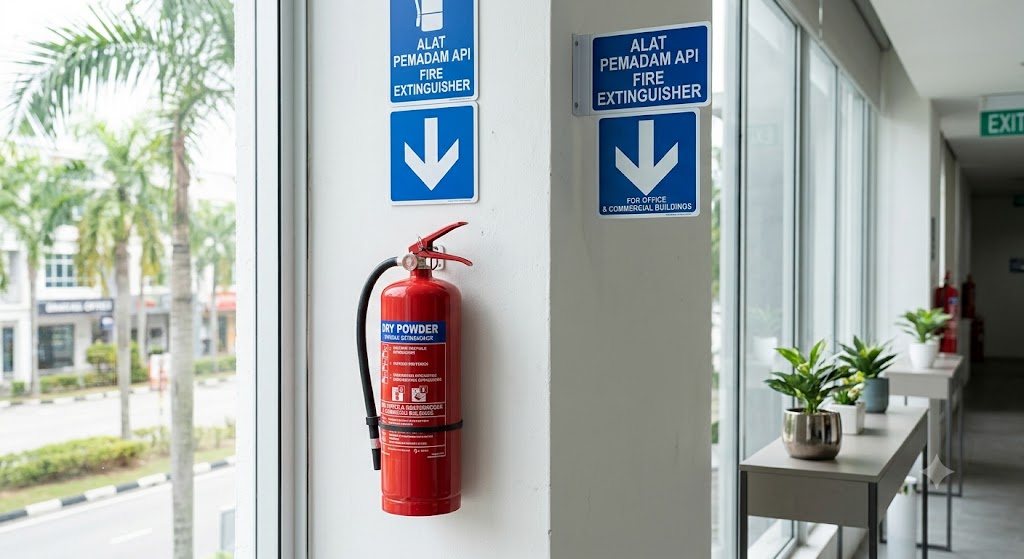
Portable Fire Extinguishers Malaysia are important fire safety devices used in offices, factories, warehouses, shops, restaurants, schools and commercial buildings to help control small fires during the early stage of an emergency.
The word “portable” means the extinguisher can be carried and used manually by a trained person. This makes it useful as a first-response fire protection tool before a fire becomes larger or before emergency responders arrive.
In Malaysia, portable fire extinguishers are commonly installed as part of basic fire safety planning. They help protect people, property, equipment and business operations when placed and maintained correctly.
For a deeper understanding of extinguisher categories, you can also read AITO’s guide on different types of fire extinguishers.
Why Every Business Needs the Right Fire Extinguisher
Fire can happen in many areas, including electrical rooms, kitchens, offices, workshops, storage areas, parking areas and production floors.
Even a small fire can become serious if there is no suitable fire safety equipment nearby. This is why businesses should not treat fire extinguishers as optional equipment.
Portable fire extinguishers help provide an immediate response when a fire is still small. When used correctly, they can help control the fire, reduce damage and prevent the situation from becoming worse.
For businesses, fire extinguishers are not just safety equipment. They also support workplace safety, building protection and fire compliance.
Businesses can refer to official fire safety information from BOMBA Malaysia and workplace safety references from the Department of Occupational Safety and Health Malaysia.
Common Types Used in Malaysia
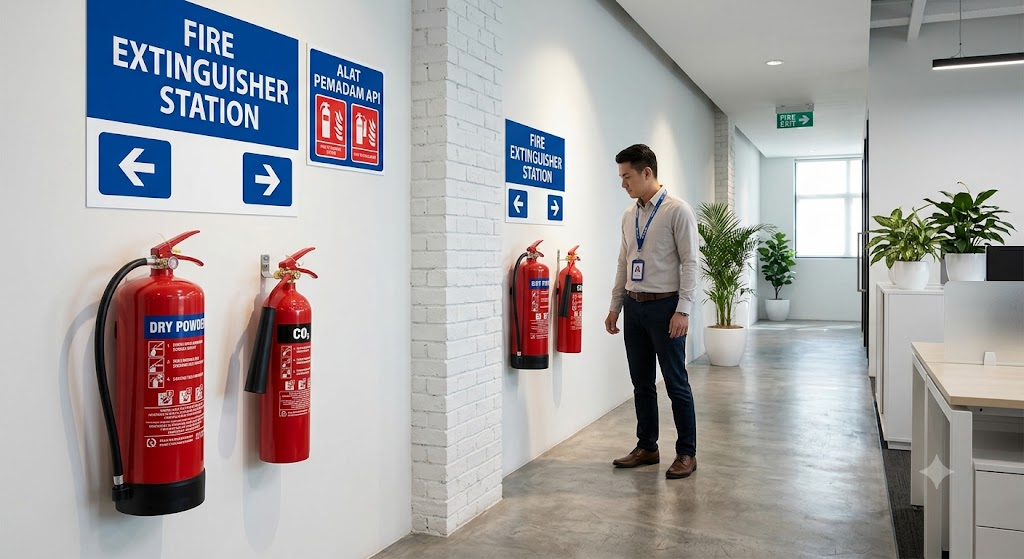
There are several types of fire extinguishers commonly used in Malaysia. Each type is designed for different fire risks.
Choosing the wrong extinguisher may reduce effectiveness or create additional danger. That is why business owners should understand the basic extinguisher types before choosing one for their premises.
Common portable fire extinguisher types include:
- Dry powder fire extinguishers
- CO2 fire extinguishers
- Foam fire extinguishers
- Water fire extinguishers
- Wet chemical fire extinguishers
Each extinguisher has its own purpose depending on the type of material involved in the fire. For example, dry powder extinguishers are widely used for general fire risks, CO2 extinguishers are often used near electrical equipment, and wet chemical extinguishers are more suitable for cooking oil and fat fires in kitchens.
This is why businesses should not choose extinguishers based only on price or size. The extinguisher must match the actual fire risk in the premises.
Dry Powder Fire Extinguishers
Dry powder fire extinguishers are among the most common extinguishers used in Malaysia. They are often selected because they can be used for several types of fires.
These extinguishers are commonly found in:
- Factories
- Workshops
- Warehouses
- Parking areas
- Commercial buildings
- General business premises
Dry powder extinguishers can be useful for certain solid material fires, flammable liquid fires and gas-related fire risks.
However, dry powder extinguishers can create a lot of residue after discharge. This may affect electronics, equipment and sensitive areas. Because of this, businesses should consider the environment before deciding where to place dry powder extinguishers.
CO2 Fire Extinguishers
CO2 fire extinguishers are commonly used for electrical fire risks. They are suitable for areas where electrical equipment and sensitive devices are present.
Common locations include:
- Server rooms
- Electrical panels
- Offices
- Control rooms
- Equipment rooms
- Electrical switch rooms
One of the main advantages of CO2 extinguishers is that they do not leave heavy residue like dry powder extinguishers. This makes them suitable for areas with electrical equipment or sensitive devices.
However, CO2 extinguishers may not be suitable for all types of fires. They are also less effective in open or windy areas because the gas can disperse quickly. Proper placement and correct usage are important.
Foam Fire Extinguishers
Foam fire extinguishers are often used for fires involving solid materials and certain flammable liquids. They work by covering the burning surface and reducing oxygen contact.
Foam extinguishers may be suitable for:
- Offices
- Shops
- Storage areas
- Commercial premises
- Certain flammable liquid risk areas
However, foam extinguishers are not usually recommended for electrical fire risks unless the extinguisher is clearly rated and suitable for that use.
As with all extinguishers, the business should check the fire risk before selecting foam extinguishers for the premises.
Water Fire Extinguishers
Water fire extinguishers are mainly used for fires involving ordinary solid materials such as paper, wood and fabric.
They may be suitable for certain areas such as:
- Offices with paper materials
- Storage rooms with ordinary solid materials
- Non-electrical areas
- Low-risk general spaces
However, water extinguishers are not suitable for electrical fires, oil fires or flammable liquid fires.
Because of this limitation, water extinguishers must be placed carefully. Using water on the wrong type of fire can increase danger, especially if electrical equipment or cooking oil is involved.
Wet Chemical Fire Extinguishers
Wet chemical fire extinguishers are designed for cooking oil and fat fires. They are commonly used in food and beverage premises.
Common locations include:
- Restaurants
- Cafés
- Hotel kitchens
- Canteens
- Food courts
- Commercial kitchens
- Central kitchens
Wet chemical extinguishers work by cooling the burning oil and forming a protective layer over the surface. This helps reduce the risk of reignition.
For businesses in the F&B industry, wet chemical extinguishers are especially important because normal extinguishers may not be suitable for hot cooking oil fires. AITO also provides kitchen wet chemical system solutions for businesses that need stronger kitchen fire protection.
How to Choose the Right Extinguisher
Choosing the right extinguisher depends on the type of premises and the fire risks present.
A restaurant, office, factory and warehouse may all need different extinguisher types. A general extinguisher may not be enough if the premises contain electrical equipment, cooking oil, flammable liquids or high-risk storage materials.
Before choosing an extinguisher, business owners should consider:
- Type of business premises
- Materials stored in the area
- Electrical equipment present
- Cooking activities
- Flammable liquids or chemicals
- Building layout
- Staff accessibility
- Distance from fire risk areas
- Maintenance requirements
For example, an office may require extinguishers suitable for electrical and paper-related fire risks. A restaurant may need wet chemical extinguishers near the kitchen. A warehouse may require extinguishers suitable for storage and operational risks.
The safest approach is to get advice from a fire protection specialist who can assess the premises and recommend the correct extinguisher type and placement.
Best Placement for Fire Safety
Fire extinguishers should be placed in visible and accessible locations. They should not be hidden behind furniture, blocked by storage items or placed too far away from risk areas.
Common placement areas include:
- Corridors
- Exits
- Staircases
- Kitchens
- Electrical rooms
- Workshops
- Production areas
- Storage areas
- Near fire risk zones
Good placement is important because during an emergency, people must be able to locate the extinguisher quickly.
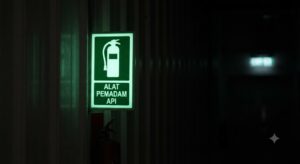
If the extinguisher is difficult to find, blocked or placed in the wrong area, it may not help during a fire. Proper signage should also be used so that the extinguisher can be identified easily.
You can read more about this in AITO’s guide on fire extinguisher signage Malaysia.
Fire Extinguisher Use for Offices and Commercial Buildings
Offices usually have fire risks such as electrical equipment, paper, furniture, pantry appliances and wiring systems.
Portable fire extinguishers help provide early fire protection if a small fire occurs. Office buildings often require extinguishers near exits, corridors, pantry areas and electrical rooms.
A good office fire safety plan should include:
- Portable fire extinguishers
- Clear fire extinguisher signage
- Emergency exit routes
- Fire alarms
- Emergency lighting
- Regular fire safety checks
- Basic staff awareness
Staff should also know where the extinguishers are located and understand basic emergency procedures.
Fire Extinguisher Use for Factories and Warehouses
Factories and warehouses usually have higher fire risks because of machinery, electrical systems, storage materials, chemicals, packaging items and operational activities.
Extinguishers in these premises must be selected based on the actual fire risk. A general extinguisher may not be enough if the building contains flammable liquids, electrical panels, production equipment or high-risk materials.
Factories and warehouses should ensure that extinguishers are:
- Placed at strategic locations
- Not blocked by goods or pallets
- Suitable for the fire risks in each area
- Clearly labelled with signage
- Checked and serviced regularly
- Easy for trained staff to access
This helps improve emergency response and reduces the risk of fire spreading across operational areas.
Fire Extinguisher Use for Shops and Retail Premises
Retail shops, shopping lots and commercial buildings need fire extinguishers to protect staff, customers and property.
These premises may have fire risks from electrical systems, display materials, storage rooms, air-conditioning equipment and stock storage areas.
Extinguishers should be placed in accessible locations and supported with clear signage. Business owners should also make sure that staff know the basic steps to take during a fire emergency.
For commercial buildings, fire safety should not depend on extinguishers alone. It should also include proper building fire protection systems, emergency routes and regular inspection.
Fire Extinguisher Use for Vehicles and Company Fleets
A portable extinguisher can also be useful for vehicles, especially company fleets, commercial vehicles, logistics vehicles and vehicles that carry equipment or goods.
A vehicle fire can happen due to:
- Electrical faults
- Overheating
- Fuel issues
- Accident-related causes
- Battery-related risks
- Mechanical failure
Having a suitable extinguisher inside the vehicle can help provide early response in a small fire situation.
For vehicle-related safety, you can also read AITO’s article on fire extinguisher for car Malaysia.
Portable Fire Extinguishers Malaysia Maintenance
Portable Fire Extinguishers Malaysia must be maintained regularly to ensure they are ready for emergency use.
An extinguisher that is expired, damaged, discharged or not pressurised may fail when needed. This can create serious safety risks for the premises.
Basic maintenance checks should include:
- Pressure gauge condition
- Safety pin condition
- Hose condition
- Nozzle condition
- Body condition
- Expiry date
- Signage visibility
- Accessibility
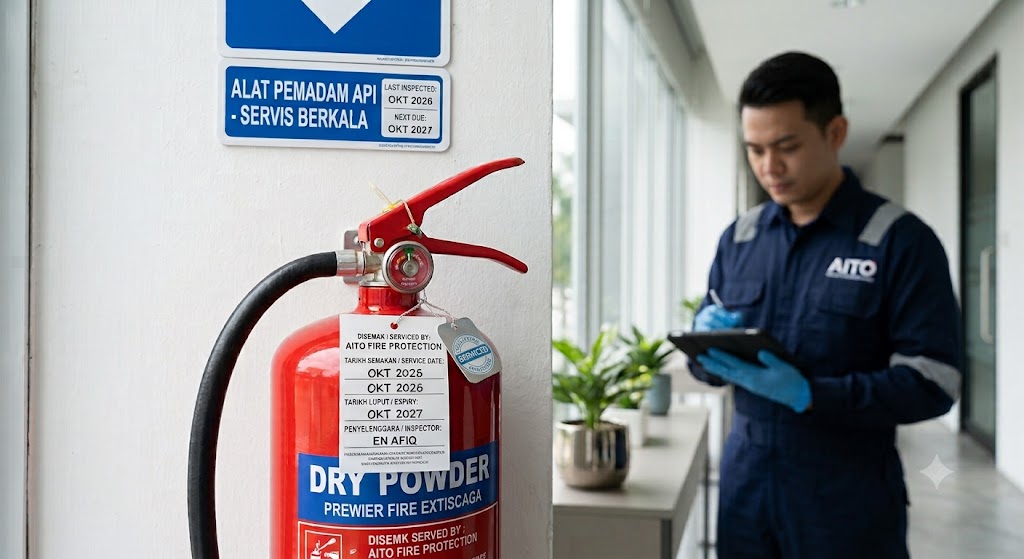
- Service label
Businesses should not wait until an inspection to check their extinguishers. Regular internal checks and scheduled professional servicing can help avoid safety issues.
For standards-related references, businesses may also refer to the Department of Standards Malaysia.
Common Fire Safety Mistakes to Avoid
Many businesses have fire extinguishers, but not all of them are placed or maintained correctly. This can reduce their usefulness during an emergency.
Common mistakes include:
- Using the wrong type of extinguisher
- Placing extinguishers too far from risk areas
- Blocking extinguishers with stock or furniture
- Ignoring expired units
- Missing fire extinguisher signage
- Not training staff
- Failing to service extinguishers regularly
- Assuming one extinguisher type is suitable for all fire risks
Another common mistake is only reviewing fire safety after an inspection. A proper fire safety review should be done regularly, especially when the premises layout, equipment or operations change.
Fire Extinguishers and UBBL Malaysia
For your information, fire safety in buildings is closely connected to building requirements, fire protection systems and emergency planning. Fire extinguishers are one part of a larger fire safety setup.
In Malaysia, building fire safety may involve requirements related to:
- Fire exits
- Emergency lighting
- Fire alarms
- Hose reels
- Fire extinguishers
- Fire access routes
- Building fire protection systems
For more information, you can read AITO’s guide on Uniform Building By-Laws UBBL in Malaysia.
Why Work with AITO?
Choosing Portable Fire Extinguishers Malaysia may look simple, but the wrong decision can affect safety and compliance.
A fire protection provider can help assess the premises, recommend the correct extinguisher type, advise on placement and support maintenance.
This is especially important for businesses with multiple risk areas such as:
- Kitchens
- Electrical rooms
- Factories
- Warehouses
- Workshops
- Commercial buildings
- Retail premises
- Company fleets
AITO provides fire protection products and solutions for businesses in Malaysia. Whether your premises need extinguishers, extinguisher signage, kitchen fire protection or other fire safety solutions, AITO can help recommend the right setup.
Visit AITO to learn more about fire protection solutions.
Need Fire Extinguishers for Your Premises?
If your office, factory, warehouse, shop, restaurant or commercial building needs fire extinguishers, AITO can help you choose the right solution based on your premises and fire risk.
Whether you need specialized equipment for off-grid operations via our remote area solution or essential personal protection like a fireproof bag to secure critical files, choosing the right equipment is vital for emergency readiness.
The right extinguisher can help protect your staff, customers, property and business operations during an emergency.
Get Fire Extinguisher Advice from AITO
Visit AITO to learn more.
Conclusion
Portable Fire Extinguishers Malaysia are essential fire safety equipment for many types of premises. They provide early fire response and help reduce damage when used correctly.
However, choosing the right extinguisher is important. Different environments have different fire risks, and one extinguisher type may not be suitable for every situation.
Businesses should select the correct extinguisher type, place it properly, maintain it regularly and make sure staff understand basic fire safety procedures.
With the right fire protection planning, portable fire extinguishers can become an effective part of a safer workplace and commercial environment.
Frequently Asked Questions About Portable Fire Extinguishers Malaysia
Q: What are Portable Fire Extinguishers Malaysia used for?
A: Portable Fire Extinguishers Malaysia are used to help control small fires during the early stage of an emergency in offices, factories, shops, restaurants, schools and commercial buildings.
Q: What are the common types of fire extinguishers?
A: Common types include dry powder, CO2, foam, water and wet chemical fire extinguishers. Each type is designed for different fire risks.
Q: Which fire extinguisher is suitable for offices?
A: Offices commonly require extinguishers suitable for electrical and general fire risks. The exact type depends on the office layout, equipment and building requirements.
Q: Which fire extinguisher is suitable for kitchen fires?
A: Wet chemical fire extinguishers are commonly used for cooking oil and fat fires in kitchens, restaurants and food preparation areas.
Q: How often should fire extinguishers be checked?
A: Fire extinguishers should be checked regularly to ensure they are not expired, damaged, blocked or discharged. Professional servicing should also be arranged based on the required maintenance schedule.
Q: Where should fire extinguishers be placed?
A: Fire extinguishers should be placed in visible, accessible locations near risk areas, exits, corridors, kitchens, electrical rooms or operational areas.
Q: Can AITO supply Portable Fire Extinguishers Malaysia?
A: Yes. AITO provides fire protection products and solutions for businesses in Malaysia, including Portable Fire Extinguishers Malaysia and related fire safety equipment. Visit AITO for more information.