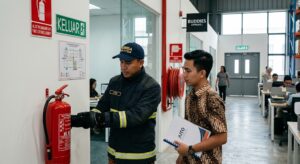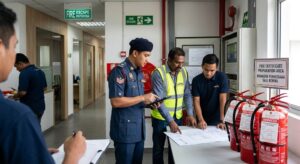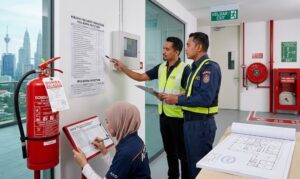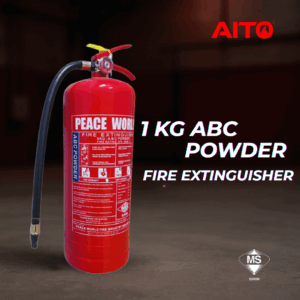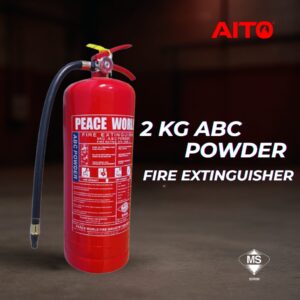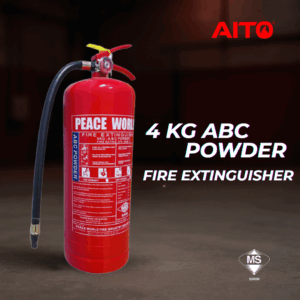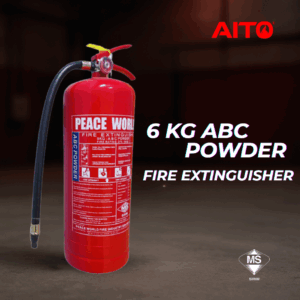
BOMBA fire safety requirements are important for business premises in Malaysia because they help ensure that buildings are prepared for fire emergencies.
Whether you operate an office, factory, warehouse, restaurant, retail shop, workshop, commercial building or industrial facility, fire safety should not be treated as a last-minute requirement.
Many business owners only start checking their fire safety equipment when they are preparing for inspection, renovation approval, Fire Certificate application or building handover. However, proper fire safety preparation should be managed continuously.
This guide explains the key fire safety areas that businesses should understand, including fire extinguishers, signage, emergency exits, hose reels, alarms, housekeeping and inspection readiness.
For fire protection solutions, fire extinguisher supply, servicing, signage and fire safety equipment, you can visit AITO Fire Protection Malaysia.
Why BOMBA Fire Safety Requirements Matter
Fire safety requirements are not only about compliance. They are about protecting people, property and business operations.
A fire incident can cause injury, building damage, stock loss, equipment failure, business interruption and costly recovery work.
Proper fire safety preparation helps businesses:
- Protect employees, customers and visitors
- Reduce fire spread risk
- Support safer evacuation
- Improve emergency response
- Reduce property and equipment damage
- Prepare better for inspection
- Support business continuity
- Improve workplace safety readiness
For businesses, fire safety should be seen as part of daily operations, not only as a requirement during inspection.
Who Should Understand Fire Safety Requirements?
Fire safety is relevant to many people involved in business premises and building operations.
This may include:
- Business owners
- Building owners
- Tenants
- Property managers
- Facility managers
- Safety officers
- Factory managers
- Warehouse operators
- Restaurant operators
- Retail shop owners
- Contractors
- Developers
- Maintenance teams
Even if a consultant or contractor handles technical submissions, the business owner or building operator should still understand the basic fire safety responsibilities inside the premises.
Fire Extinguishers Must Be Suitable and Accessible
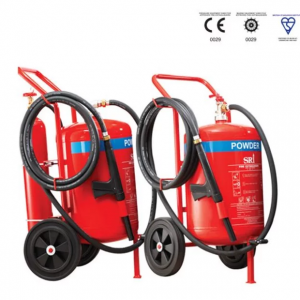
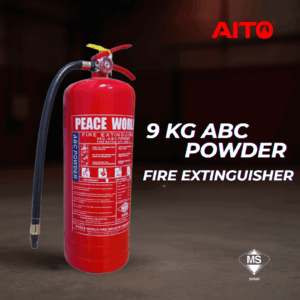
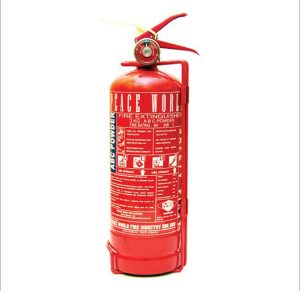
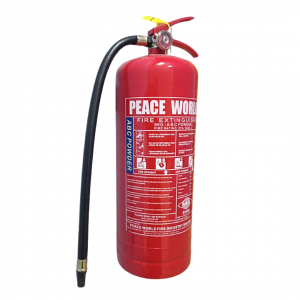
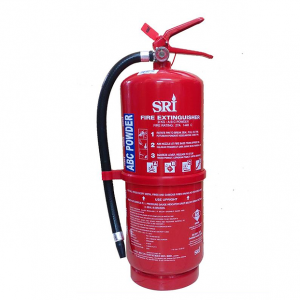
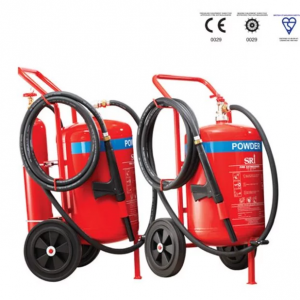
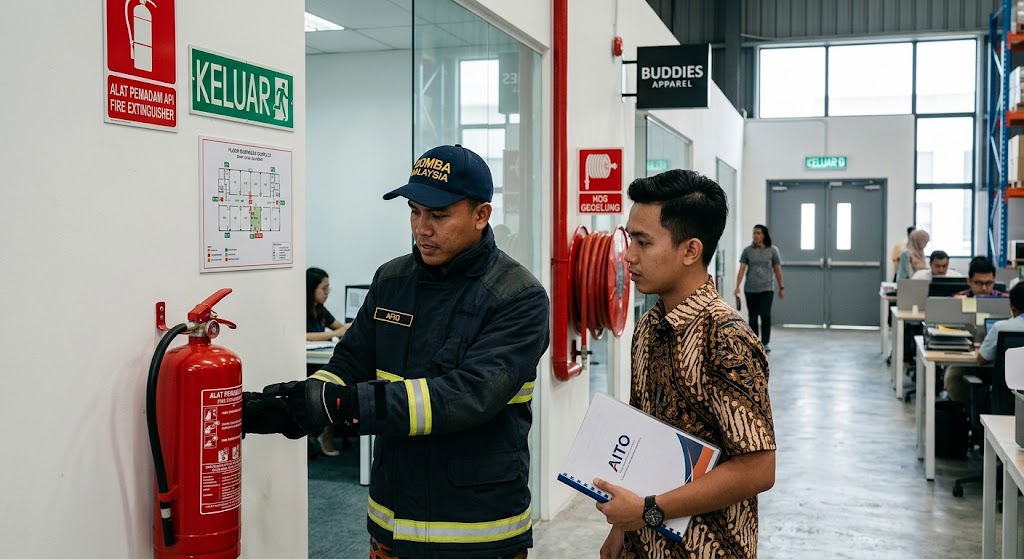
Fire extinguishers are one of the most common fire safety items found in business premises.
However, having a fire extinguisher is not enough. It must be suitable for the risk area, placed correctly, easy to access and properly maintained.
Businesses should check whether fire extinguishers are:
- Visible
- Easy to reach
- Not blocked by stock, furniture or equipment
- Properly serviced
- Not expired
- Suitable for the fire risk
- Clearly marked with signage
- Installed in the correct location
- Free from visible damage
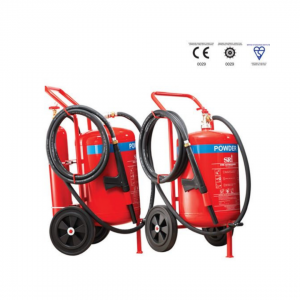
Different areas may need different extinguisher types.
For example, an office, kitchen, warehouse, factory, server room and electrical room may not have the same fire risk.
You can read AITO’s guide on Jenis-Jenis Alat Pemadam Api to understand common fire extinguisher types in Malaysia.
Fire Extinguisher Signage Should Be Clear
Fire extinguisher signage helps people locate the nearest extinguisher quickly during an emergency.
In many premises, extinguishers become difficult to find because they are hidden behind stock, furniture, decoration or display items. Good signage helps reduce confusion.
Fire extinguisher signage should be:
- Clear
- Visible
- Easy to understand
- Located near the extinguisher
- Not blocked
- Not faded
- Not damaged
- Suitable for the premises layout
This is especially important in factories, warehouses, commercial buildings, offices and retail spaces where visitors or new staff may not know the building layout.
You can also read AITO’s guide on Fire Extinguisher Signage Malaysia.
Emergency Exits Must Remain Clear
Emergency exits and escape routes are critical during a fire emergency.
Even if a building has fire extinguishers and alarms, people still need a safe way to leave the premises.
Businesses should make sure that emergency exits are:
- Clearly marked
- Easy to open
- Not locked during occupancy
- Not blocked by stock or furniture
- Supported by proper exit signage
- Connected to clear escape routes
- Not used as storage areas
Common problems include boxes near exit doors, furniture blocking corridors, renovation materials along walkways and locked emergency doors.
These issues should be corrected immediately because they can delay evacuation during an emergency.
Exit Signage and Emergency Lighting
Exit signage helps occupants identify the correct escape route.
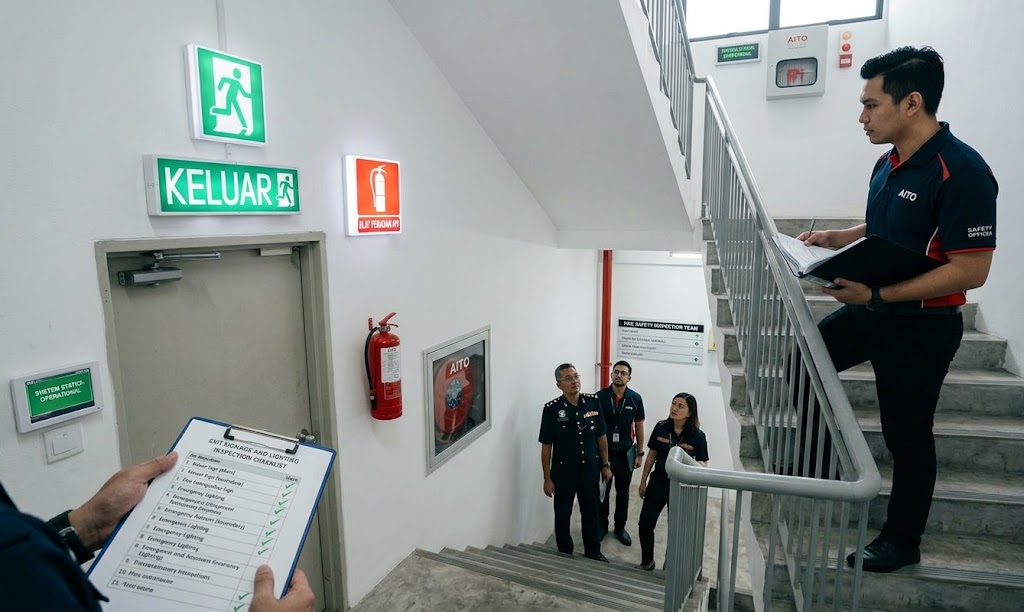
Emergency lighting helps people move safely if the power supply fails or visibility is reduced.
Businesses should check whether:
- Exit signs are visible
- Signs are not blocked
- Emergency lights are working
- Staircases and corridors are properly lit
- Exit route signs are not damaged
- Backup systems are maintained where applicable
Missing or damaged exit signage can create confusion during evacuation.
This is especially important for premises with many rooms, multiple floors, corridors or customer areas.
Hose Reel Systems Should Be Accessible
Many commercial and industrial buildings have hose reel systems as part of fire protection readiness.
A hose reel is only useful if it is accessible, maintained and ready for use.
Businesses should check whether:
- Hose reel cabinets are visible
- Access is not blocked
- Hose and nozzle are in good condition
- Cabinet doors can open properly
- Signage is clear
- Maintenance records are available
- The area around the hose reel is clean
Stock, pallets, display items or furniture should not be placed in front of hose reel cabinets.
Blocked hose reels can create serious issues during emergency response or inspection.
Fire Alarm Systems Need Regular Attention
A fire alarm system helps warn occupants early when a fire is detected or reported.
For business premises, the fire alarm system should be maintained and monitored properly.
Important items to check may include:
- Fire alarm panel condition
- Manual call points
- Alarm sounders
- Visual indicators where applicable
- Fault indicators
- Power supply status
- System labels
- Maintenance records
- Access to the alarm panel
If the panel shows a fault, it should not be ignored.
A fire alarm fault may affect emergency readiness and should be checked by a competent service provider.
Fire Doors Should Not Be Kept Open Improperly
Fire doors are designed to help slow the spread of smoke and fire.
However, in some buildings, fire doors are left open with door wedges, boxes or other objects.
This can reduce their effectiveness.
Businesses should check whether fire doors are:
- Not damaged
- Able to close properly
- Not held open improperly
- Not blocked
- Clearly accessible
- Installed in the correct areas where required
Staff should understand that fire doors should not be treated like normal convenience doors.
They play an important role in fire safety and smoke control.
Electrical Rooms and DB Panels Should Be Clear
Electrical rooms, switch rooms and distribution board areas carry fire risks if they are poorly maintained or used for storage.
Businesses should avoid placing combustible items near electrical panels.
Common issues include:
- Boxes stored in electrical rooms
- Cleaning items placed near DB panels
- Loose cables
- Overloaded extension plugs
- Blocked access to panels
- Missing warning signage
- Poor housekeeping
Electrical rooms should remain clean, accessible and properly maintained.
Fire extinguishers near electrical areas should also be suitable for electrical-related risks.
Housekeeping Is Part of Fire Safety
Good housekeeping helps reduce fire risk.
Poor housekeeping can increase fire load, block equipment, restrict access and make emergency response more difficult.
Businesses should avoid:
- Storing boxes near exits
- Blocking fire extinguishers
- Placing stock in corridors
- Leaving waste materials near electrical equipment
- Storing items inside risers or staircases
- Blocking hose reels
- Using electrical rooms as storage areas
- Allowing loose cables along walkways
A clean and organised premises is easier to inspect, safer to operate and better prepared for emergencies.
Fire Safety for Offices
Offices commonly contain computers, printers, documents, furniture, pantry appliances and electrical equipment.
Office fire safety should focus on:
- Suitable fire extinguishers
- Clear exits
- Safe electrical usage
- Pantry equipment safety
- Proper document storage
- Fire extinguisher signage
- Emergency route visibility
- Staff awareness
Office renovations or partition changes should also be reviewed because they may affect escape routes and extinguisher access.
Fire Safety for Factories
Factories usually carry higher fire risks because they may involve machinery, production lines, electrical systems, chemicals, flammable materials and storage areas.
Factory fire safety should focus on:
- Fire extinguishers for different risk zones
- Clear access to fire equipment
- Chemical storage controls
- Hot work safety
- Machine area housekeeping
- Electrical room safety
- Loading bay access
- Fire alarm and hose reel readiness
A factory should not rely on one extinguisher type for every area because each zone may have a different fire risk.
Fire Safety for Warehouses
Warehouses often store large volumes of goods, cartons, pallets, plastic wrapping and packaging materials.
Warehouse fire safety should focus on:
- Clear aisles
- Proper stock arrangement
- Accessible fire extinguishers
- Visible signage
- Hose reel access
- Emergency exit clearance
- Safe forklift charging areas
- Control of combustible materials
Blocked fire equipment is a common warehouse issue and should be checked regularly.
Fire Safety for Restaurants and Kitchens
Restaurants and commercial kitchens have specific fire risks because of cooking oil, gas systems, hot surfaces, electrical appliances and exhaust areas.
Kitchen fire safety should focus on:
- Suitable extinguishers for cooking oil risks
- Clear access near cooking areas
- Gas safety awareness
- Electrical equipment safety
- Clean exhaust hoods and ducts
- Staff awareness
- Emergency exits
- Proper housekeeping
A normal extinguisher may not be enough for commercial kitchen risks. The extinguisher type should match the actual fire risk.
Fire Safety for Retail Shops
Retail shops may have compact layouts, customer areas, product displays, stock rooms, lighting systems, electrical points and packaging materials.
Retail fire safety should focus on:
- Visible fire extinguishers
- Clear signage
- Unblocked exits
- Safe electrical usage
- Organised stock storage
- Clean back-of-house areas
- Staff awareness
- Customer evacuation planning
Shop owners should make sure promotional displays or stock boxes do not block fire safety equipment.
Common Fire Safety Mistakes Businesses Make
Many business premises make simple mistakes that can affect fire safety readiness.
Common mistakes include:
- Keeping expired fire extinguishers
- Blocking emergency exits
- Missing fire extinguisher signage
- Blocking hose reels
- Ignoring fire alarm faults
- Using electrical rooms as storage
- Not checking extinguisher service tags
- Not reviewing fire safety after renovation
- Poor housekeeping
- No clear person in charge of fire safety
These issues are usually preventable with regular checks.
Fire Safety and Renovation Work
Whenever a business renovates, changes layout or changes building use, fire safety should be reviewed again.
Renovation can affect:
- Escape routes
- Exit signage
- Fire extinguisher placement
- Hose reel access
- Fire alarm coverage
- Emergency lighting
- Electrical load
- Storage risk
- Occupant movement
For example, adding partitions in an office or changing a retail shop layout may affect access to emergency exits or fire extinguishers.
Businesses should not assume that the old fire safety arrangement is still suitable after renovation.
Documents and Records Businesses Should Keep
Good fire safety management also includes proper documentation.
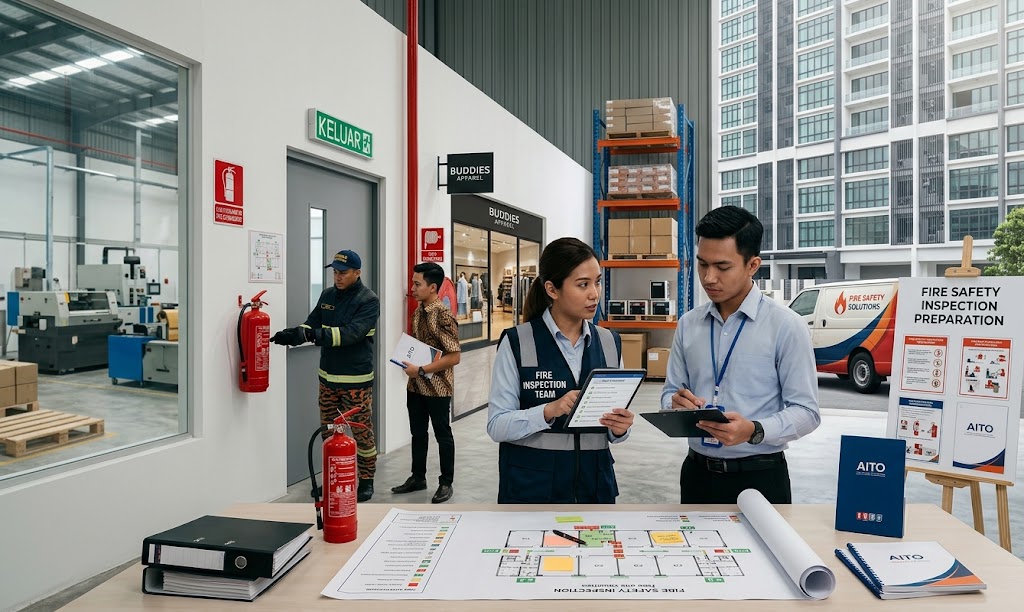
Useful records may include:
- Fire extinguisher service records
- Fire alarm maintenance records
- Hose reel maintenance records
- Fire safety system records
- Inspection records
- Testing records where applicable
- Layout information
- Fire drill records where applicable
- Previous inspection comments
- Contractor or service provider details
These records help building owners and facility teams monitor fire safety readiness more effectively.
How Businesses Can Prepare for Inspection
Before any fire safety inspection or review, businesses should conduct an internal walk-through.
Recommended checks include:
- Check all fire extinguishers
- Check fire extinguisher signage
- Clear emergency exits
- Check exit signage and emergency lighting
- Review hose reel access
- Check fire alarm panel condition
- Review electrical rooms
- Remove storage from fire equipment areas
- Prepare maintenance records
- Assign a person in charge
Early preparation helps reduce last-minute problems.
Official Fire Safety Information
Fire safety requirements may depend on the type of building, activity, risk level and authority requirements.
For official fire safety information and updates, businesses may refer to the Fire and Rescue Department of Malaysia BOMBA.
For workplace safety guidance, businesses may also refer to the Department of Occupational Safety and Health Malaysia DOSH.
Businesses should always check the latest requirements relevant to their premises and get professional advice when needed.
How AITO Can Help
AITO provides fire protection solutions, fire extinguisher supply, servicing, signage, fire safety equipment and inspection preparation support for businesses in Malaysia.
AITO can assist with checking fire extinguishers, improving signage, reviewing fire safety equipment readiness and supporting practical fire protection needs for different premises.
This includes offices, factories, warehouses, restaurants, retail shops, workshops, commercial buildings and industrial facilities.
To learn more, visit AITO Fire Protection Malaysia.
Conclusion
BOMBA fire safety requirements are important for business premises in Malaysia because they support safer buildings, better emergency response and stronger inspection readiness.
Businesses should pay attention to fire extinguishers, signage, emergency exits, hose reels, alarm systems, electrical rooms, housekeeping and maintenance records.
Most fire safety issues can be reduced through regular checks, proper servicing and early preparation.
By working with a reliable fire protection provider, businesses can improve fire safety readiness and create a safer environment for employees, customers, visitors and building occupants.
FAQ: BOMBA Fire Safety Requirements for Business Premises
What are BOMBA fire safety requirements for businesses?
They generally relate to fire safety readiness, including fire extinguishers, signage, emergency exits, fire alarms, hose reels, maintenance records and other fire protection systems depending on the premises.
Do all business premises need fire extinguishers?
Most business premises should have suitable fire extinguishers based on the fire risk and building layout. The extinguisher type should match the area it protects.
Why is fire extinguisher signage important?
Signage helps people locate fire extinguishers quickly during an emergency. It is especially important in larger or busy premises.
Can blocked emergency exits cause fire safety issues?
Yes. Emergency exits and escape routes must remain clear so people can evacuate safely during a fire.
Should fire safety be reviewed after renovation?
Yes. Renovation, layout changes or change of use may affect escape routes, equipment placement, fire alarm coverage and overall fire safety readiness.
What records should businesses keep for fire safety?
Businesses should keep service records, maintenance records, inspection records, testing records and relevant fire safety system documents where applicable.
Who can help businesses prepare fire safety equipment in Malaysia?
AITO provides fire extinguisher supply, servicing, signage, fire safety equipment and inspection preparation support for businesses and buildings in Malaysia.